


COSTA RICA
Green Season
5–15 May 2027
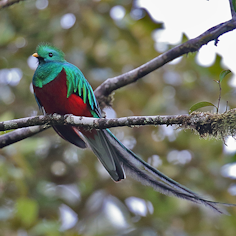
Costa Rica has a well-deserved reputation as one of the world’s greatest birding destinations. With comfortable lodging, amazing food and incredible scenery, this shorter, budget ‘green season’ tour is perfect for those wanting a late spring break but still wanting to see many of the iconic resident species such as the Resplendent Quetzal. This tour is being run in conjunction with Birdwatch Magazine and Birdguides.
Day 1 Indirect flight from London via another city (no direct flights to Costa Rica in May) to San José followed by a 15-minute transfer to our hotel for an overnight stay.
Day 2 From our conveniently located hotel we skirt San José and take the Braulio Carrillo road north to the waiting Caribbean lowlands via the middle-elevation forests on the slopes of Poas Volcano, where the cooler climate will certainly be a nice change from the lowlands. Our first stop will be in the La Virgen del Socorro Valley. As we bird this steep, forested valley we will eventually find a mixed-species flock which may hold Collared Trogon, Smoky-brown Woodpecker, Black-headed Tody-flycatcher, Slaty-capped Flycatcher, Pale-vented Thrush, Tropical Parula, and a long list of colourful tanagers. On sunny days, raptors may steal the show, with Barred and White Hawks and both Black and Ornate Hawk-eagles present here. Swifts, from the small Vaux’s to the very large White-collared, are prevalent in the valley and are all amazing fliers. The rushing river below is home to Torrent Tyrannulet and American Dipper, each with a different technique for catching their prey. Late this morning we will make our way up to La Paz Waterfall Gardens. Though a tourist destination with all that entails, it is very scenic and one can get outrageous views of some normally difficult hummingbirds. Expect no less than ten species at the feeders here, including Green Hermit, the endemic Coppery-headed Emerald, the local and unique Black-bellied Hummingbird, the local White-bellied Mountain-gem with its cousin Purple-throated Mountain-gem and the fancy Green Thorntail. A search around the trail edges typically produces the local Sooty-faced Finch as well as the rather shy Slaty-backed Nightingale-thrush. A mixed flock here often contains Spotted Barbtail, Lineated Foliage-gleaner, Costa Rican Warbler, Slate-throated Whitestart, Spangle-cheeked Tanager and many others. We will have a buffet lunch before walking it off on a scenic trail which takes us past several spectacular waterfalls. Later in the afternoon we will head down to our comfortable hotel which will be our base for the next three nights. Excellent food, great service, rooms with AC, fruit feeders for birds and lovely gardens will make our stay here a delight.
Day 3 La Selva Research Station is widely considered to offer the best Caribbean lowland birding in Costa Rica and has one of the most diverse ecosystems on the planet. The habitat is mainly primary rainforest, with scattered patches of secondary growth, slow-moving rivers and muddy lazy creeks. Expect a list of over 100 species today, with many quality sightings. We will begin along the entrance road in the early morning and then move to the many forested trails within. Beware of whiplash, as the birds will be coming quickly and from every direction! Species we may expect today include Great Tinamou, Grey-headed Chachalaca, Short-billed Pigeon, Lesser Swallow-tailed Swift, Keel-billed Toucan, Collared Aracari, Black-throated Trogon, Rufous-tailed Jacamar, Rufous and Broad-billed Motmots, Pale-billed and Lineated Woodpeckers, Northern Barred Woodcreeper, Wedge-billed and Cocoa Woodcreepers, Black-crowned Antshrike, White-ringed Flycatcher, the diminutive Black-capped Pygmy-tyrant, Purple-throated Fruitcrow, the immaculate Snowy Cotinga, Band-backed, Black-throated and Stripe-breasted Wrens, Red-throated Ant-tanager, Dusky-faced, Golden-hooded and Plain-coloured Tanagers, Green and Shining Honeycreepers and several species of euphonia. After lunch and a short siesta at our hotel, we will make a concerted effort to locate the glorious Great Green Macaw – a species that has made a comeback in this area of late. Back in La Selva, we will continue our efforts, hoping for one or two of the difficult birds that sometimes magically appear here, including Semiplumbeous Hawk, Agami Heron, Olive-backed Quail-dove, Vermiculated Screech-owl and Spot-fronted Swift. Mammals occurring here include Collared Peccary, Mantled Howler, both Two-toed and Three-toed Sloths, Tayra and Long-nosed Bat. The large trees along the Sarapiqui River are home to a large population of Green Iguanas, some measuring well over a metre in length. Today will also give us a good opportunity to see Strawberry Poison Dart Frog, aka “Blue Jeans”. Though hot and humid at times, our day at La Selva always produces a dazzling array of birds and other wildlife.
Day 4 We will leave early this morning to bird a rocky rushing river where Fasciated Tiger-heron likes to hunt. In the gallery forest lining the river, we will watch for Cinnamon Woodpecker, Buff-rumped Warbler and Scarlet-rumped Cacique among others. Moving on, our next destination will be Braulio Carrillo National Park, one of the largest and most accessible Caribbean foothill forests. Although sometimes very quiet, an encounter with a mixed-species flock will make it all worthwhile. These flocks can contain Russet Antshrike, Streak-crowned Antvireo, Green Shrike-vireo, Emerald and Tawny-crested Tanagers, White-ruffed Manakin and Black-faced Grosbeak to name but a few. A host of difficult species occurs in the park and, with luck; we may find Yellow-eared Toucanet, Lattice-tailed Trogon and Blue-and-gold Tanager. Another site we will visit very close by contains flowering bushes where, with patience, we can usually find Violet-headed Hummingbird, the incomparable Snowcap and the dressed-to-impress Black-crested Coquette. After lunch we will visit Cope’s feeders. At first you might think, “Why are we stopping here?” but upon entering the hide it becomes obvious. White-necked Jacobin, Bronze-tailed Plumeleteer and Stripe-throated and Long-billed Hermits all jostle for position at the nectar feeders while woodpeckers, honeycreepers, tanagers, oropendolas and euphonias fight over the bananas and papaya. Seemingly anything can show up in this garden with a pond, including Green Kingfisher, Russet-naped Wood-rail and even the occasional White-tipped Sicklebill! It doesn’t get much better than tasty coffee and cookies with birds at arm’s length! Pulling ourselves away from the feeders we will make a diversion into gallery forest nearby. Roosting Spectacled Owl is our focus and it rarely disappoints. Our chances are lower for finding a roosting Crested Owl but they do occur. One of the most precious mammals you could ever wish to see also occurs here. First we need to find a chewed rachis of a Heliconia leaf, folded downwards forming a tent. If we look underneath, with luck there will be a roosting group of Honduran White Bats. This is one of several species of tent-making bat in the Neotropics, but by far the most adorable. By now it will be late in the afternoon and we will drive back to the hotel for our third and final night in the Sarapiqui area.
Day 5 This morning we head south towards San Jose again and spend the morning birding around the Braulio Carrillo N.P. This is the road from Limon, the major port on the Caribbean side of the country to San Jose so is very busy with traffic. Nevertheless, there is some fantastic birding on the edges of the park one of which is some gardens where the incredible Snowcap (hummingbird) can be found. Other birds that are possible on nearby trails include the rare Bare-necked Umbrellabird and the near-endemic Blue-and-gold Tanager. Whilst searching the trails, we should encounter a number of other scarce or interesting species such as Barred Hawk, Purplish-backed and Ruddy Quail-Doves, the uncommon near-endemic Lattice-tailed Trogon, Rufous-winged Woodpecker, the elusive Northern Nightingale-wren, Black-headed Antthrush, Thicket Antpitta, the monotypic Sharpbill and the scarce Pale-vented Thrush. If we ‘luck in’ to an antswarm with various antbirds, Woodcreeper and ant-tanager in attendance, there is a small chance of finding a ‘holy grail’ bird such as the ultra-elusive Rufous-vented Ground-cuckoo or even a Black-crowned Antpitta. Primates in the forests could include Geoffroy’s (or Central American) Spider Monkey and Mantled Howler Monkey. After lunch, we will pass around the cities of San Jose and Cartago (the former capital) to the south of Volcan Turriabba to the edge of Parque Nacional Tapanti for an overnight stay. Species we may see here include the local and endemic Cabanis’s Ground-sparrow, White-crowned Parrot, Crimson-fronted Parakeet, Chestnut-headed and Montezuma Oropendolas and Cabanis’s Wren. Our overnight accommodation is a lovely resort located next to a creek with hot springs. After dinner we will look for owls including Tropical Screech Owl and Mottled Owl.
Day 6 An early morning stroll in the gardens usually produces the gorgeous Sunbittern and we hope to get excellent views of this iconic species. We will then drive a short distance to bird a waterworks road through forest at a location known as Rio Macho. Here, in the lush middle-elevation forest, we will search out mixed-species flocks which often hold Red-headed Barbet, Golden-olive Woodpecker, Red-faced Spinetail, Scaly-throated Foliage-gleaner, Golden-bellied Flycatcher, White-winged Tanager, Scarlet-thighed Dacnis, Tawny-capped Euphonia and many others. The skulking Zeledon’s Antbird occurs here and we will certainly try to coax one of these army ant followers into view. Raptors we will be on the lookout for include the common Broad-winged Hawk as well as the less common Bat Falcon. After backtracking through Cartago and head up into the Chiriqui Highlands before dropping down into the Savegre River Valley for a two-night stay where we will look for one of the most eagerly-anticipated bird of the tour, the stunning Resplendent Quetzal.
Day 7 During our time in the highlands we will focus on searching out the many Chiriqui Highland near-endemics occurring here. These are species found only in the highlands of Costa Rica and western Panama. The cool early morning will find us huddled at the coffee-maker on the back porch, while a subsequent walk into the nearby forest should produce a nice selection of birds including Spotted Wood-quail, Ruddy-capped Nightingale-thrush and Chestnut-capped Brushfinch. Once the sun appears over the high mountain peaks, it warms up nicely and the birds become very active. We will watch for social groups of Acorn Woodpeckers, Tufted Flycatcher, Mountain Elaenia, Dark Pewee, Yellow-winged and Brown-capped Vireos, glorious Long-tailed Silky-flycatchers, Sooty-capped Bush-tanager, Flame-coloured Tanager, Slaty Flowerpiercer, Yellow-thighed Brushfinch and many others. Hummingbirds at this altitude include the tiny Scintillant and Volcano Hummingbirds, the recently-split Talamanca Hummingbird and White-throated Mountain-gem. The attractive resident subspecies of Red-tailed Hawk can sometimes be seen soaring above the lodge while flocks of Sulphur-winged Parakeets zip past to their favourite fruiting trees. After breakfast we will take a 4x4 vehicle to the trailheads above. Now on foot, in the primary oak forests we will look for more near-endemics including Ruddy Treerunner, Streak-breasted Treehunter, Black-billed Nightingale-thrush, Black-faced Solitaire, Flame-throated and Black-cheeked Warblers, Collared Whitestart and Large-footed Finch. Buffy Tuftedcheek and Spot-crowned Woodcreeper are also present, though more widespread overall. We hope to encounter a small flock of the very uncommon and somewhat nomadic Silvery-throated Jay while birding this impressive forest. The amazing Resplendent Quetzal can sometimes be found in the fruiting aguacatillo trees in the valley and we will make a special search for this iconic bird. After lunch and a siesta we will continue birding the valley, perhaps taking in a local feeding station for close-up views of many hummingbirds including the aptly named Fiery-throated Hummingbird, various colourful tanagers and Sooty and Mountain Thrushes. At dusk we will make an effort to find another near-endemic, the local Dusky Nightjar.
Day 8 After an early breakfast and enjoying the feeders at the lodge, we will head up the extremely steep hill out of the valley and continue to the Cerro Muerte (yes, mountain of death!) which is the highest point of the Pan-American Highway in Costa Rica at an altitude of 3400 metres where we will look for special highland birds including Peg-billed Finch, Volcano Junco and try and coax out the more timid Timberline Wren. We have a long drive ahead but will make several stops including a visit to Tolomuco Lodge where the hummingbird feeders and flowers present as well as banana feeders entice a multitude of birds to the garden. We will be on the lookout for Long-billed Starthroat, the bold and beautiful Violet Sabrewing, Green-crowned Brilliant and the localised White-tailed Emerald, while the bananas attract Scarlet-rumped (Cherrie’s race), Silver-throated and Speckled Tanagers and White-naped Brushfinch. Two wildly-attractive birds that we will be looking for in the mistletoe berries are Elegant Euphonia and Golden-browed Chlorophonia along with the more subtle Mistletoe Tyrannulet. Eventually we will reach the Pacific coast and follow it northwest to Punta Leona, our base for the next two nights. For those with any energy left a post dinner session may give us Striped Owl and Common Pauraque.
Day 9 The whole day will be spent at the world famous Carara National Park, one of the most productive birding sites in all of Costa Rica. Many of the lowland Pacific rainforest specialities can be found here and we will make special effort to locate as many of these as possible, including the recently split Chiriqui Foliage-gleaner, Black-hooded Antshrike, Streak-chested Antpitta, Orange-collared Manakin and Black-bellied Wren, while also taking in more widespread species such as White-whiskered Puffbird, Black-faced Antthrush, Chestnut-backed Antbird, Dot-winged Antwren, Rufous Piha, Golden-crowned Spadebill, both Red-capped and Blue-crowned Manakins and Orange-billed Sparrow. Raptors possible here include King Vulture, Double-toothed Kite and the reclusive Collared Forest-falcon to name but a few. Over the past two decades, the spectacular Scarlet Macaws have done very well in the Carara area and are now a common and welcomed sight. Mammals possible here include three species of monkey: Mantled Howler, Central American Spider and White-throated Capuchin. White-nosed Coati and Central American Agouti are often seen in the forest undergrowth of the park. Reptiles are common, with Green and Spiny-tailed Iguanas and Central American Whiptail all being conspicuous.
Day 10 Sadly, our final day in Costa Rica and at ‘crack of dawn’ we will take breakfast, pack our cases and board the bus. That’s not the end of the birding however, we will make good use of this final early morning of the tour and by 06.00 will be boarding our boat for a ride along the Tarcoles River. Birdlife is prolific here and most of the wildlife is fairly tame, making for excellent photo opportunities. As we cruise along small, mangrove-lined channels we will no doubt see an impressive number of herons and egrets, with Boat-billed Heron often being the star, although Bare-throated Tiger-heron is a close second. Yellow-crowned Night-heron is also present along with White Ibis, Osprey, the mangrove subspecies of Common Black Hawk, Northern Jacana, Collared Plovers, American Yellow (Mangrove) Warbler and Rufous-browed Peppershrike. We also have another chance for the endemic Mangrove Hummingbird. No less than five species of kingfisher can be found here and we will make a concerted effort to locate the smallest of these, the precious American Pygmy Kingfisher. Other wildlife here includes huge Central American Crocodiles which can be found along the riverbanks, sunning themselves as if posing for photos, while Crab-eating Raccoon can sometimes be seen poking around along the banks as well. After the boat trip we will load up and make the ascent from the Pacific lowlands to the central valley and San José International Airport in time for our overnight flight to London, arriving on Day 11.
General Information The climate varies from hot and humid in the rainforests to very cool/cold in the highland zones. Some rain is expected (it is the ‘green season’!), especially on the Caribbean side. The tour pace is moderate, although at altitude extra effort is needed. There are some health requirements which should be referred to your GP. Insects can be a minor problem at some localities and repellent is recommended. The tour is run in partnership with Costa Rica Gateway, the premier birdwatching tour company in Costa Rica.
Group size Minimum number for tour to go ahead: 6; maximum group size: 10 with driver and local guide.
 Currency converter