


INDONESIA
Sulawesi and Halmahera
11 October–4 November 2027
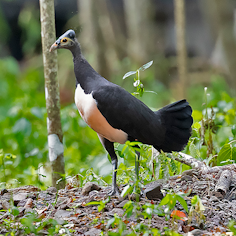
The islands of Indonesia hold a veritable treasure trove of bird species found nowhere else on Earth. This tour takes us to two islands in search of many of their endemic gems, beginning with a visit to the wonderful Lore Lindu National Park in Sulawesi, where we will look for such delights as the striking Yellow-billed Malkoha, the delightful Crimson-crowned Flowerpecker, Purple-bearded Bee-eater and Cerulean Cuckooshrike among many others. Time spent at Bogani Nani Wartabone National Park should provide views of perhaps the star bird of this tour – the critically endangered Maleo – together with the impressive Knobbed Hornbill, Purple-winged Roller and perhaps an Ochre-bellied Boobook. Our time on Halmahera will see us looking for some completely different but equally spectacular species, including the beautiful Ivory-breasted Pitta, Drummer (or Invisible) Rail, the much-sought-after Azure Dollarbird, Standardwing Bird-of-paradise and Moluccan Scrubfowl.
Day 1 Overnight flight from London to Jakarta and a further direct flight to Palu in central Sulawesi, arriving early on Day 3. You can leave a day earlier and overnight in Jakarta on Day 2, with extra cost just for the hotel.
Day 3 On arrival in Palu we will drive to one of the finest national parks in Indonesia, Lore Lindu, for a four-night stay in a guest house in Wuasa, near to the park. We will be birding en route to look for such species as Grey-sided Flowerpecker, Blue-tailed Bee-eater, Glossy Swiftlet, Little Bronze-cuckoo, Javan Pond-heron, Pale-headed, Chestnut, Scaly-breasted and Black-faced Munias and Savanna Nightjar at a daytime roost site.
Days 4–6 Lore Lindu is home to over 70 of the bird species endemic to Sulawesi, and we will focus our attention on seeing as many of these as possible. Our search will take us from birding at lower altitudes from the roadside to higher elevations via an old logging road in Lore Lindu. The Anaso Trail may give us at least four of the most sought-after endemics: Geomalia, Heinrich’s Nightjar, Great Shortwing and Purple-bearded Bee-eater. The latter breeds in roadside banks and often perches in the open forest, giving fantastic views. One of the rarer pigeons, Sombre Pigeon, is also possible here, together with White-bellied and Grey-headed Imperial-pigeons and Red-eared Fruit-dove. Other endemic species that we may see here include: White-eared Myza, Cerulean Cuckooshrike, the tricky Maroon-backed Whistler, the Sulawesi subspecies of Spangled Drongo, Crimson-crowned Flowerpecker and Sulawesi Thrush, which behaves more like a babbler than a thrush! As if those weren’t enough, also on our wishlists will be: Sulawesi Brush Cuckoo (split from Brush Cuckoo), Blue-fronted Warbling-flycatcher, the striking Yellow-billed Malkoha, Sulawesi Babbler, Malia and Mountain Serin. Scaly-breasted Kingfisher can usually be found hiding in a forest gully, while Mustard-capped Lorikeet and Golden-mantled Racquet-tail are usually flyovers. We may also be lucky enough to see the inconspicuous Northern Hylocitrea, which recent studies show not to be related to the whistlers and, as a result, it is now placed firmly in its own monotypic family. The two common starlings – Fiery-browed Starling and Grosbeak Starling – can often be found in good numbers in open country, where they nest in large colonies. We will also be scanning for Sulawesi Swiftlet in the valley bottoms, and Sulawesi Hawk-eagle soaring overhead. Dwarf Sparrowhawk, Vinous-breasted Sparrowhawk and Spot-tailed Goshawk are also possible here. At lower altitudes, we will be looking for Lemon-bellied White-eye, Sulawesi Cicadabird and Ivory-backed Woodswallow. Night-time birding may provide views of Sulawesi Scops-owl, Sulawesi Masked-owl and Speckled and Cinnabar Boobooks
Day 7 After a last morning birding in Lore Lindu looking to add a few extra species to our lists – maybe a Sulawesi Hanging-parrot, a Yellow-sided Flowerpecker, a Sulawesi Serpent-eagle or a Black Sunbird – we will drive back to Palu for an overnight stay. On arrival, we will spend some time birding in the beach area in search of Malay Plover, Grey-tailed Tattler, Common Sandpiper, Pacific Reef-egret and White-shouldered Triller. Overnight in Palu.
Day 8 This morning we will catch a flight to Makassar, where we will bird the forest nearby for species such as Black-headed Kingfisher (split from Green-backed Kingfisher), Piping Crow, White-necked and Sulawesi Mynas, Sulawesi Hornbill, Pied Bushchat and the relatively newly described Sulawesi Streaked Flycatcher. Our next stop will be at a series of fishponds, where we will look for Yellow Bittern, Rufous Night-heron, Lesser and Greater Crested Terns, Javan Pond-heron, Pacific Golden Plover, Terek, Green and Wood Sandpipers, Purple Heron and Cattle and Intermediate Egrets. After a late lunch at a local restaurant, we will head into the mountains for an overnight stay in Malino.
Day 9 Today will see us hiking to the Lompobattang forest, where our main targets will be Lompobattang Flycatcher and Lompobattang Leaf-warbler. In this small forest we also have the chance to see Black-ringed and Mountain White-eyes, Ashy and Sulawesi Woodpeckers, Citrine Canary-flycatcher, Sulawesi Fantail (split from Rusty-bellied), the delightful Snowy-browed Flycatcher, Little Pied Flycatcher, Streak-headed White-eye, Dark-eared Myza and Sulphur-bellied Whistler. On our way back to Makassar, we will make some birding stops in the hope of seeing Asian Woollyneck in the dam area and Pale-bellied Myna. Further fishpond birding should produce Javan Plover, the Pied or White-headed subspecies of Black-winged Stilt, Great-billed Heron, Australasian Reed-warbler and Whiskered and Little Terns. Overnight in Makassar.
Day 10 This morning we will catch a flight to Manado at the very northern end of Sulawesi. We will then drive in a southwesterly direction in search of the colourful Sulawesi Pitta, Sulawesi Myzomela, Turquoise Flycatcher, Sulawesi Blue-flycatcher and the stunning Western Superb Fruit-dove. If we missed it earlier in the tour, we have a second chance to look for Speckled Boobook in the evening here. Overnight in Tomohon.
Day 11 After a last morning birding here in search of any missing target species, we will take lunch and then embark on the roughly four-hour drive to Kotamobagu for a four-night stay.
Days 12–14 The days at Bogani Nani Wartabone National Park (formerly known as Dumoga Bone National Park) should be incredibly productive. We will spend time looking for Sulawesi endemics such as Bay Coucal and the Black-billed form of Western Koel in forest tangles, while frugivores in the canopy will hopefully include White-faced Cuckoo-dove, Yellow-breasted Racquet-tail and the vocal Oberholser’s Fruit-dove (split from Maroon-chinned). We may also see the canopy-loving Pied Cuckooshrike, Ornate Lorikeet, Blue-backed Parrot, Pygmy Hanging-parrot and the extraordinary Knobbed Hornbill. In open areas, we may see Purple-winged Roller and flyover Sulawesi Honey-buzzard or Lesser Fish-eagle. In addition, we also have an opportunity to see Sulawesi Goshawk, while Spotted Harrier is more common here. Our primary target in this area, however, is the rare and elusive Maleo, a critically endangered megapode that is perhaps Sulawesi’s most famous and enigmatic species. Maleos lay their eggs colonially in the ground in areas where the soil is heated volcanically; they use this geothermal heat to incubate the eggs. As soon as the chicks appear on the surface, they are able to run and fly into the bushes. Unfortunately, many locals catch the birds and collect the eggs for food, making the Maleos’ survival precarious. However, in several places in Sulawesi, the birds are protected and eggs are collected and reared in the safety of a hatchery. As a result, numbers are slowly increasing. At dusk, we may add to our tally of night birds with Ochre-bellied Boobook.
Day 15 This morning, we will bird the submontane forests of Gunung Ambang, which are equally rich in bird life. Our main target will be the localised Matinan Warbling-flycatcher, an endemic species restricted to the montane forest of the Minahasa Peninsula. We also have further chances to see Scaly-breasted Kingfisher and Sombre Pigeon if we have not yet done so. Finds may also include the distinctive local subspecies of Malia, which is different from that found in Lore Lindu. From here we will have another long drive to Tangkoko National Park, our base for the next three nights.
Days 16–17 Tangkoko is a wonderful park, supporting many of Sulawesi’s lowland endemic birds. We will spend much of our time exploring the excellent trails, where we will see endemic kingfishers like the unmistakable Blue-headed Kingfisher, Sulawesi Lilac Kingfisher and Sulawesi Dwarf-kingfisher. The non-endemic Ruddy Kingfisher is also possible here. In addition, we will take a boat trip for another target, Great-billed Kingfisher. As well as the kingfisher, this trip may yield White-bellied Sea-eagle, Brahminy Kite, Green-backed Heron, an occasional Brown Booby mixed in with Lesser and Great Frigatebirds, Black-naped Tern and White-winged Tern. The mangroves hold two further endemics – White-rumped Cuckooshrike and White-rumped (or Sulawesi) Triller – together with the pretty Pink-necked Green-pigeon and Common, Collared and Sacred Kingfishers. The park also holds White Imperial-pigeon, the Sulawesi subspecies of Slender-billed Crow, Grey-cheeked Green-pigeon and Pale-blue Monarch. We can also expect to see difficult species such as the exquisitely patterned Red-backed Thrush and the shy Philippine (or Tabon) Scrubfowl. While walking the trails through the forest, we may also come across troops of Sulawesi Crested Macaque and Spectrum Tarsier in their roost trees. If we are very lucky, we may also see Sulawesi Bear Cuscus. In the more open, forest edge and grassland habitats, birds should include Lesser Coucal, Sooty-headed Bulbul, Black-naped Oriole, Golden-bellied Gerygone, Black-crowned White-eye, Olive-backed and Brown-throated Sunbirds and White-breasted Woodswallow.
Day 18 Early this morning we will catch a flight to Halmahera, the largest island of the Moluccan archipelago. The Moluccas are famed as the “Spice Islands,” which completely dominated the world trade in cloves, mace and nutmeg for centuries. While many of Halmahera’s fantastic endemics are now threatened by forest clearance for logging, mining and palm oil, it is still possible to find many special species. Our boat crossing to Sofifi will give us a good chance to see Beach Kingfisher before we continue our drive to Aketejawe National Park, our base for the next two nights.
Days 19–20 During the course of our birding in Aketejawe National Park, we will focus on the incredible endemics of this area, which include the glorious Ivory-breasted Pitta (which we hope to see from a hide), the tricky Drummer Rail, Halmahera Paradise-crow, Long-billed Crow, White-naped Monarch, Drab Whistler, North Moluccan Pitta, Dusky Scrubfowl, Island Leaf-warbler, Halmahera Golden Bulbul, the Halmahera subspecies of Spangled Drongo, Moluccan and White-bellied Cuckooshrikes, Halmahera Cicadabird, White-streaked Friarbird, Halmahera Flowerpecker, Halmahera Oriole, Goliath Coucal, Rufous-bellied Triller, Moluccan Starling, Moluccan Swiftlet and one of the most sought-after: Azure Dollarbird. To avoid a long walk to the lek, local people have built a series of tarpaulin tents for visitors to use before watching the extraordinary Standardwing Bird-of-paradise as it performs in its regular display trees. There is also a tower from which to try and take photographs. We will spend one night in this very basic accommodation to give us our best chance of watching the dawn display of this wonderful bird, only found on Halmahera and Bacan. In the forest there are also good numbers of parrots, fruit-doves and pigeons including Chattering Lory, Moluccan King-parrot, Moluccan Hanging-parrot, Great-billed Parrot, the stunning Violet-necked Lory, Moluccan Eclectus, Red-flanked Lorikeet, Red-cheeked Parrot, White Cockatoo, Cinnamon-bellied and Spectacled Imperial-pigeons, Scarlet-breasted, Blue-capped and Grey-headed Fruit-doves and Great Cuckoo-dove. An array of kingfishers should also feature, including Sombre Kingfisher, Blue-and-white Kingfisher, Common Paradise-kingfisher and the rare Azure Kingfisher. Raptors possible here include Gurney’s Eagle, Moluccan Goshawk and sometimes Pygmy Eagle and Pacific Baza. We will spend one evening in this area looking for Moluccan Scops-owl, Moluccan Owlet-nightjar, Halmahera Boobook and, with luck, Barking Owl. After lunch on Day 20, we will travel to Subaim for a two-night stay.
Day 21 Birds we hope to encounter today include Cream-throated White-eye, Pied Imperial-pigeon, Variable Goshawk, Moustached Treeswift, Moluccan Monarch (split from Spectacled) and, with luck, the rare Dusky Myzomela. We will also spend some time searching this area for any birds that we may have missed in Aketejawe.
Day 22 After a final morning birding in the forest, we will take a long drive to the north. In the evening, we will visit the communal breeding grounds of the Moluccan Scrubfowl. This megapode comes to the beaches at night to lay its eggs and with some luck, we might hope to see one or more birds in the spotlight. Overnight in Tobelo.
Day 23 Today we will make the long journey to Sidangoli followed by a sea crossing to Ternate. After saying our goodbyes to our local guides, we will catch a flight to Jakarta to connect with our return flight to London, arriving on Day 24.
General Information Maximum temperatures are around 32°C throughout the year, decreasing with altitude to a minimum of 14°C at night in the highlands. The (relatively) dry season starts in late April running through to November although rain can be expected at any time of year. The pace of the tour is moderate, with a medium degree of fitness required for walks of up to 5–6 miles. Most days we will take a break at midday to relax. The highest altitude to which we will ascend is under 2,200m. There are a number of health requirements including malaria and you must consult with your GP in this respect. Accommodation throughout is a combination of comfortable hotels and wildlife/birding lodges with private facilities and air-conditioning except in Lore Lindu National Park where air-conditioning is not needed and in Aketejawe National Park with basic, shared facilities and no air-conditioning. Visas are required and can obtained on arrival at a cost of around £25.
Group Size Minimum number for tour to go ahead: 6, maximum group size, 8 with 1 leader.
IT IS POSSIBLE TO ARRANGE AN EXTENSION TO MOROTAI, BACAN AND OBI ISLANDS IF THERE IS ENOUGH INTEREST.
 Currency converter